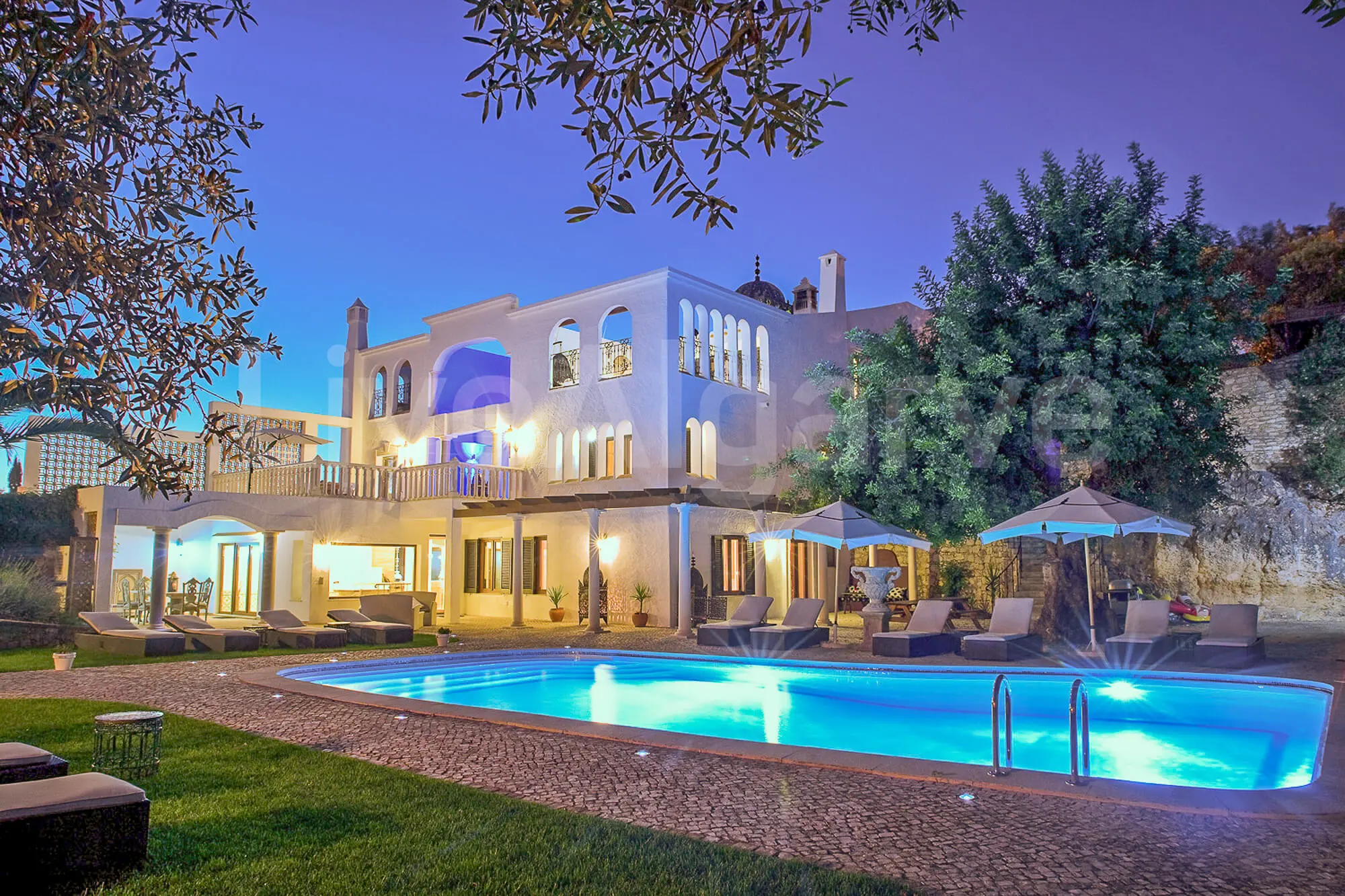
The Shoulder Season Economics of Western Algarve Property in 2026
|
How shoulder season demand is reshaping western Algarve property value in 2026, with longer rental use, pricing shifts and buyer trends. |
|
By LiveAlgarve on 5th June 2026 - 4 m. reading time For most of the last two decades the conventional shorthand for the Algarve property market treated the summer as the point of the year and treated everything either side of it as decoration. May was a warm-up, October a slow goodbye, and the underlying valuation logic for a holiday home assumed roughly ten useful weeks a year with the rest of the calendar discounted heavily. That assumption no longer holds in the western Algarve, and anyone modelling a purchase along the Lagos coast in 2026 needs to understand that the so-called shoulder months have quietly become the fundamental rather than the incidental part of the case. The economic weight of May, June, September and October has shifted, and with it the way coastal property between Praia da Luz and Salema ought to be valued. The numbers gathered by the Região de Turismo do Algarve through the trailing twelve months tell a clearer story than the headline summer figures usually allow. Across the western municipalities the spring and autumn occupancy curves have continued to flatten out toward the peak, with May and October running at intensities that, ten years ago, would have been reserved for July alone. Restaurants now open through the spring rather than waiting for high season, and the calendar of golf events, sailing regattas and food festivals that anchors the shoulder months has thickened year on year. The result is a property type whose use value across the year has materially expanded without the headline summer demand softening at all.
Why the shoulder season now does the heavy liftingThere are three forces behind this shift, and each of them is structural rather than fashionable. The first is climate. Summer along the southern coast of Portugal has become hotter on average through the past several seasons, and the lifestyle buyers who form the bulk of the western Algarve market have responded by extending their stays into the cooler months at either end. A buyer arriving from Munich, Stockholm or Edinburgh in late May or late September now finds the conditions that the high-summer brochures used to promise, and that perception is reshaping how prime stock is held and used. The second force is connectivity. Direct flight schedules into Faro have continued to broaden through 2025 and into the spring schedules of 2026, with several Northern European carriers now running their shoulder-month timetables at frequencies that would have been treated as peak-season only a few years ago. Easier access in March, April, October and November has lengthened the window during which a coastal property is realistically usable as a near-primary residence rather than a summer let, and Lagos sits at a particular advantage given its roughly hour-long drive from the airport. The third force is demographic. The Northern European retirement-stage and pre-retirement buyer who has been arriving in the western Algarve in growing numbers since 2022 has a different annual pattern from the family buyer who set the rhythm of the earlier waves. This cohort does not need to align its year with school holidays, and it actively prefers the quieter, cooler periods that bracket the summer. As that buyer profile has thickened along the Lagos coast, demand has spread itself more evenly across the calendar, and prices for properties that work well in May, June, September and October have firmed disproportionately. Much of the most resilient buying in the western Algarve is now happening for the shoulder season rather than in spite of it.
What this changes about the valuation caseOnce the shoulder months are treated as fundamental, the arithmetic underneath a western Algarve purchase shifts. A property enjoyed across eight months of the year carries a different cost-per-use figure from one that effectively works for ten weeks, and that distinction shows up directly in long-run pricing patterns. The Lagos municipality and the surrounding western parishes contain a disproportionate share of the regional stock that lends itself to this longer use window, particularly the mid-elevation villas behind Meia Praia, the apartments in the historic centre, and the newer developments toward Boavista and Espiche where the orientation, ventilation and outdoor living arrangements suit the cooler bracketing months as well as high summer. The rental case sharpens in parallel. According to figures tracked by the national statistics office, average occupancy across the western Algarve through the past year has settled into a pattern in which May and October now sit comparable to the historical July baseline in real terms, while the peak summer remains substantially booked but is no longer the only meaningful contributor to annual yield. A shoulder-month booking carries a softer nightly rate than peak August, but its operating costs run lower, its tenant profile tends to be older and lower-friction, and its contribution to annual returns has grown to the point that a serious yield model can no longer treat the shoulder season as filler. The gap between a property optimised for ten summer weeks and one optimised for the eight-month working calendar has widened, and the pricing now reflects it.
What this means for the western Algarve in 2026For buyers approaching the rest of 2026, the practical reading is straightforward. The shoulder season has become the part of the year doing the most to support the long-run pricing case for prime stock in Lagos, Praia da Luz, Burgau and the smaller villages behind them. The territorial plan administered by the Câmara Municipal de Lagos limits how much new coastal supply can come forward, the buyer base is now weighted toward the longer-stay profile, and the lifestyle calendar that supports an eight-month use window has continued to thicken through the past twelve months. Each of those factors compounds the others, and the result is a market in which prime western Algarve property is being repriced quietly around the longer year rather than around the shorter summer. It also reframes how the wider European context bears on the local market. Several of the major Northern European housing markets that supply much of the Algarve buyer base have moved through their own corrections over the past two years and are now firming again into 2026, freeing equity for second-home purchases at exactly the moment when the western Algarve is becoming more useful for more of the year. The currency picture against sterling and the dollar has remained broadly supportive into the early part of 2026, and the slow path of European Central Bank rate cuts has made financing for non-resident buyers a fraction more flexible than it was twelve months ago. The conjunction of those external factors with the lengthening usable year along the western coast is not coincidental, and it forms much of the reason why prime Lagos stock has continued to attract serious buyers through what is, elsewhere in Europe, a noticeably more cautious moment. For anyone considering villas for sale in the Algarve or Algarve apartments for sale within the western strip during the rest of this year, the question worth asking is no longer whether a property will work in August. The relevant question is whether it will work in late May, in early June, in the quiet weeks of September and through the warm dry start of October, because that is where the durability of the case now sits. Properties that answer well to that broader question are being held and priced accordingly, and the gap between them and the rest of the regional market has widened steadily over the trailing twelve months. The shoulder season has moved, quietly, from the edge of the calendar to the centre of the valuation argument, and the western Algarve is where that change is most clearly visible in 2026. |