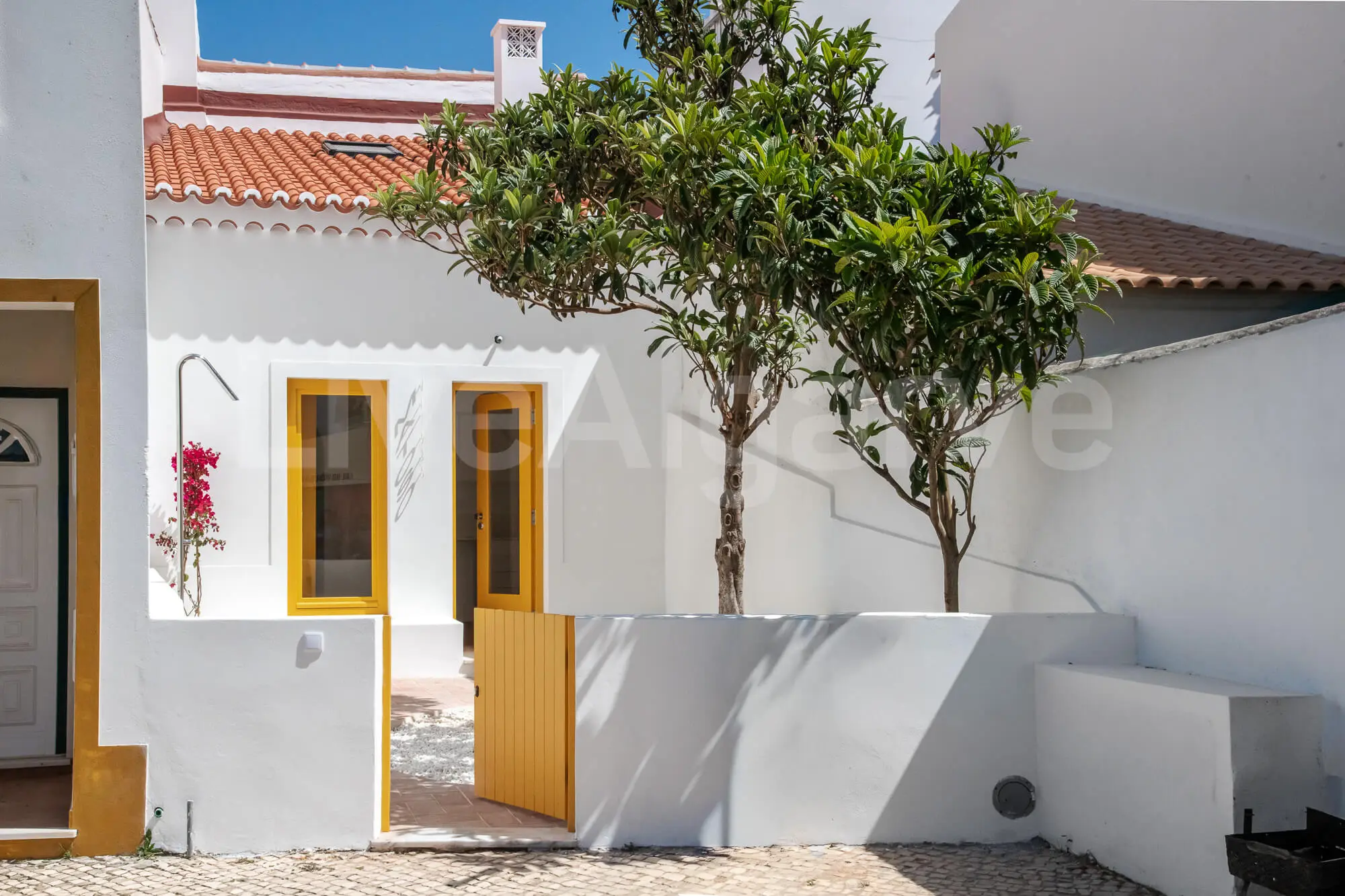
Why Micro Location Now Decides Value Across Lagos in 2026
|
Discover why micro location is shaping Lagos property values in 2026. Learn how street, aspect, views and walkability influence prices and long-term investment potential. |
|
By LiveAlgarve on 26th June 2026 - 4 m. reading time For a long stretch of the western Algarve's modern history it was possible to reason about value at the level of the town. A buyer would decide that Lagos was the right place, settle on a budget, and assume that within it the choice between one well-located home and another was largely a matter of taste rather than of money. Prices moved together and, in the rare softer years, eased together, and the broad regional curve was a reliable enough guide that the precise position of a property rarely changed the arithmetic by very much. That world has quietly come apart, and for anyone weighing a purchase through the rest of 2026 the more accurate reading is that value across Lagos is no longer set at the level of the town at all, but at the level of the street, the aspect and the precise position within it. The shift is best described as a widening of dispersion, the growing gap between what the genuinely prime parts of Lagos command and what merely good stock a few hundred metres away can achieve. A decade ago that gap was real but modest, and a sound property in a slightly less favoured pocket would trade at a gentle discount to the best addresses while still tracking the same upward path. The discount has since widened into something far more consequential, and the two ends of the market now move on separate trajectories. Understanding why that is happening, and which side of the divide a given property sits on, has become the single most useful piece of judgement a buyer can bring to the western Algarve this year.
Why a maturing market pulls itself apartThe mechanism behind widening dispersion is a familiar one in any market that matures from scarcity into depth. When demand first arrives in volume and supply is tight, almost everything rises together, because buyers are competing for the simple fact of owning in the place rather than for any particular position within it. As the buyer base grows more numerous and more discerning, the competition narrows onto the specific attributes that genuinely cannot be reproduced, and the premium for those attributes pulls away from the rest. The western Algarve has now passed through enough cycles, and drawn enough well-informed buyers, that the market reads location with a precision it did not apply five or ten years ago, and that precision expresses itself directly in price. What counts as genuinely prime in Lagos has also become more sharply defined as the market has deepened. Walkability to the historic centre, an unobstructed orientation toward the light and the sea, proximity to the marina and the better stretches of coast, and a position insulated from the seasonal noise of the busier holiday quarters now carry premiums that compound rather than merely add. A home that combines several of those attributes occupies a category of its own, while a home that misses two or three of them, however handsome in itself, increasingly trades in a different conversation. The market has learned to price the difference between a view that will never be built out and one that merely happens to be open today, and that learning is the quiet engine of the dispersion now visible across the town.
The supply map makes the divide permanentWhat turns this dispersion from a passing feature into a structural one is the geography of supply, which is fixed in a way that prevents the gap from ever closing through new building. The territorial plan administered by the Câmara Municipal de Lagos, together with the protected cliffs around Ponta da Piedade, the conservation buffers inland and the density limits across the historic centre, means that the supply of truly prime positions cannot be expanded to meet the premium they now command. When an attribute is both highly valued and genuinely unrepeatable, its scarcity premium has nowhere to go but upward over time, because no developer can manufacture another front row. The merely good stock faces no such ceiling, and so the two tiers are anchored to entirely different supply dynamics within a single town. This is also why the divide expresses itself in time on the market as clearly as in price. The best-positioned homes change hands quickly and quietly, often before they are widely advertised, while property a tier below can linger even in a buoyant year, waiting for the buyer content to trade position for space or for value. We have written before about why some western Algarve properties sit unsold even in a strong market, and the deeper explanation is precisely this growing discernment, the willingness of a more experienced buyer base to hold out for the attributes that genuinely hold their value rather than to settle for a near miss simply because the wider market is rising. The pattern shows through in the figures once they are read with a little care. Registrations and transaction records compiled by the national statistics office for the Lagos municipality describe a market whose headline averages have remained firm, but the average conceals an internal spread that has widened steadily over the trailing period, with the upper reaches of the prime segment advancing while the broad middle holds more or less flat in real terms. The town-level number is increasingly a blend of two markets moving at different speeds, and reasoning from the average alone now risks misjudging both the home one is actually buying and the one across the valley that looks superficially comparable.
What dispersion means for buyers in 2026For a buyer approaching Lagos through the rest of 2026, the practical consequence is that the old habit of choosing the town first and the home second has become an expensive way to think. The more useful discipline is to read position with the same care the market now applies, weighing aspect, walkability, the durability of a view and the quiet of a street as the factors that will actually drive value over a long hold, rather than treating them as pleasant extras layered over a town-level price. The premium attached to a genuinely prime position is no longer a tax to be minimised but the very thing that underwrites resilience when the wider market pauses, because it is the prime tier that holds while the broad middle drifts. This does not mean that only the most expensive addresses are worth owning, which would be a misreading of the point. There is a sound case to be made, for the right buyer, in the well-judged home a tier below the very top, bought with clear eyes and held for the use and pleasure it offers rather than for the steepest appreciation. The error to avoid is the unexamined one, paying a prime price for a near-prime position on the assumption that a single regional curve will carry it upward regardless. Whether the interest runs to villas for sale in the Algarve behind Meia Praia and toward Boavista and Espiche, or to Algarve apartments for sale within the historic centre where walkability now commands its own premium, the question worth asking is no longer what a property costs, but which of the two markets inside Lagos it truly belongs to. The broader movement, from a town priced along a single curve to one where micro location increasingly decides value, is among the more consequential structural changes underway in the western Algarve this year, and it rewards the buyer willing to look closely far more than the one relying on the headline average. If you are weighing a particular home along the Lagos coast and want to think through which side of that widening divide it sits on, we are always glad to talk the market through and share what we are seeing across the town. |